Showing posts with label FreeDV. Show all posts

Thursday, 17 September 2015

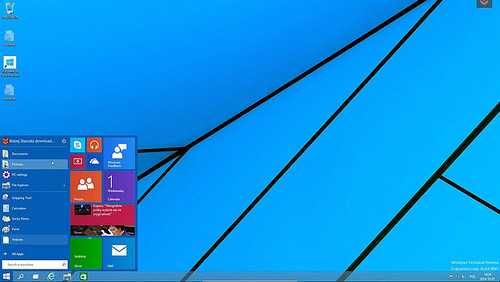
First Impressions of Windows 10

So I've had a laptop running Windows 10 for some time. It's not my work laptop, which is on Windows 7 until our corporate IT group deems otherwise, but one which I sometimes use for ham radio. It has plenty of memory (8GB) and a solid state disk drive (256GB). The only problem I've seen so far is that sometimes the mouse pointer stalls - pretty annoying at times but I can't necessarily blame Windows 10 for it and haven't looked into it because I don't use that computer very much. I was pleased to see that one old device I have for which the latest driver was written for Vista still worked under Windows 10-64.


So I took the plunge and migrated the big desktop as well. This system is a Dell XPS 9100 with two 23" monitors is integrated into the station and a bunch of other technology and so has the greatest chance of having a problem. The key thing, of course, is how well all the devices and applications work. So far it's mostly good. Here's a list I've made up in my first 3 days of operation.

Devices

  1. Rig Control through an inexpensive 4-port PCI Express serial interface - no issues.
  2. KAT500 control through the Elecraft USB to Serial adapter - no issues.
  3. Echo Audiofire 12, a 12 channel 96 KHz audio interface connected to the system's built in Fire-wire port. No issues.
  4. Mouse and Keyboard - no issues
  5. Intel Rapid Storage Technology - This software manages the mirroring of my system drives. It worked as before and reported that the drives were healthy.
  6. A Logitech USB headset which I hadn't used for some time (before I had to rebuild my Windows 7 system due to a head crash, ergo the mirrored drives I run now). The driver installed automatically.

Operating System

  1. I was concerned at first because I saw the task bar icons on the secondary monitor, so at first glance it looked like it was replicated the primary monitor extend of extending the desktop. This turned out to be a feature, so that those icons are available on either monitor. That`s a good idea I think because it makes switching between applications easier.
  2. Windows Edge took over as my default browser from Chrome. I launched Chrome manually and it came right out with a video on how to make Chrome my default browser and pin it to the task bar. Ain't competition great!

Radio Applications

  1. JT-Alert and WSJT-X worked just fine. The first time I tried to transmit the tones came out the wrong sound card, but it was easily set to rights in the WSJT-X options menu and I was back in business on the next go-round.
  2. Elecraft Utilities - work as before (KAT500, KPA500, etc)
  3. DXLab - Launcher worked as did all the applications I tried including DXKeeper, Spot Collector (using Telnet and IRC), ...
  4. FreeDV. The WAE SSB contest was under way so no joy on getting a QSO 20m but the application seems to work just as well as it did on Windows 7. I managed to crash it once but getting ahead of it but I can't blame Windows 10 for that. It's minimal rig control (PTT only) worked fine too.
  5. FLDIGI with the FLDIGI DXLab Gateway also worked perfectly for several PSK31 and PSK63 QSOs.

Other Applications

  1. Courtesy of the my office I have the Adobe Creative Cloud on my home desktop computer and use Adobe Lightroom to edit and catalogue photos for this blog. Under Windows 10, Adobe Lightroom has a problem with the AMD Radeon graphics driver. The consensus is that it is a driver bug and the solution is either to regress to the previous version of the driver or to disable graphics acceleration in the application. I chose the latter and it works fine, although I'll have to remember to change it back if and when the bug is fixed by AMD.
  2. Microsoft Office 365 also worked fine. I'd have been quite surprised if it hadn't.
So far, after 4 days of operating, it's working well. No big problems. Your mileage may vary though.

Thursday, 13 March 2014

March 2014 General Meeting - Minutes

Meeting held at the Sharon Temperance Hall. Called to order at 19:32. Chaired by Chris VE3NRT
  1. Introductions completed. 35 members and 1 guest in attendance
  2. Minutes Feb 4th general meeting; motion by Richard VE3NSD to approve the minutes, seconded by John VA3JI. Motion carried.
  3. Reports
    1. Treasury – John VA3JI
      • Balance is [Available to members on request]. Two memberships paid in February otherwise no other transactions in the month
    2. Field Day – Steve VE3UT
      • Peter VE3PBT has volunteered to run the kitchen this year. Peter VE3PBT has prepared a menu and Steve VE3UT will provide an estimate of the number to be accommodated for dinner.
      • Location: Preference is to continue using the field behind Al’s Tack Shop
    3. By-law Committee – Geoff VA3GS, Eric VE3OIC
      • Minor clean up and corrections completed. Member input has been consolidated. There is a concern that in its current form, there will be insufficient time at the AGM to discuss and vote on all the proposed changes. The by-la committee has proposed to hold a town hall meeting for interested members to review all changes with a goal to finalize the list of changes to be put to a vote at the AGM.
    4. Trailer – Barry VA3LLT
      • New RCMP tower, spoke with manufacturer of tower stripped down trailer $17K
      • Looking at old trailer, RCMP tower is 300lbs vs old tower is ~1,000 lbs.
      • Rob VE3RQB, Barry VA3LLT and welding contractor went to look at the old trailer. The Welder will supply an estimate. The trailer will not be moving until there is an okay from the BOD to do the work.
      • If estimate is approved, the target is to have the trailer fitted with new tower for field day.
  4. Member QSO awards – Bob VE3WY
    • Started June 2006 9pm however, only one certificate issued to date. The goal is to work as many York region amateur club members on as many bands as possible. There was a strong show of interested hands at meeting. Club members are encouraged to review the rules and begin making QSO’s. Bob VE3WY will issue certificates at the general meetings. Bob’s presentation will be placed on the Splatter Blog.
  5. Project Night – Brad VE3HII, Steve VASRV
    • Brad VE3HII presented an overview of his and Steve VA3SRV’s proposal to re-activate project night. The plan is to begin mid April. Project nights to be held at the Newmarket Girl Guides office or the Newmarket Community Centre on Wednesday evenings 7-9pm. Looking for a minimum of 6 participants. Initial project will be an introduction to micro controllers with the objective to build a simple proto typing system estimated to cost between $30 and $50. Presentation will be posted on the Splatter Blog.
  6. EMCOMM project Plan – Russell VE3WTR
    • Russell VE3WTR presented an update on EMCOMM activities and structure. EMCOMM is looking for volunteers. No specialized training is required. Looking for people to fulfill core roles, EOC site owners, or general responders. Presentation will be posted on the Splatter Blog.
  7. Digital voice communications – Chris VE3NRT
    • Chris presented an overview of Open Source Digital Voice Communications. Presentation will be posted on the Splatter Blog.
Meeting adjourned at 21:14

Sunday, 23 February 2014

6m Net - February 17, 2014

Just 5 of us this time, with Mike VE3FGU in the North and Chris VE3NRT at the South end for a longest path of 27km. Rob VE3RQB joined us for the first time having cobbled together a Bazooka running from inside his shack, and was copied at 5x1 by Chris VE3NRT but well over S9 by Mike. John VA3JI and Brian VE3IBW were all clearly audible which allowed for some casual conversation before signing off at 8:25.


After the net Chris and Brian had their first successful QSO with digital voice using FreeDV.

Chris, VE3NRT

Monday, 10 February 2014

6 Metre Net - Feb 3, 2014

Conditions seemed to be better than usual with better signal strengths reported by most stations. Matt VA3MGN was a bit stronger but still difficult to hear. Bruce VE3BV and Mike VE3FGU in Keswick came in strongly, and John VA3JI joined us for the first time using his 17 metre antenna on the 3rd harmonic as well as Brad VE3HII. Brian VE3IBW backed off his power this week to 10W to reduce RFI problems in his QTH.

VE3IBW and Chris VE3NRT decided to do some (only partially successful) testing with FreeDV afterwards and we contacted by Mark VE3CT while setting up, using a dipole in his kitchen.

Most stations were heard by Rob VA3RQB in Bradford. Longest path was again about 50km. VE3NRT also thanks VE3FGU for the LoTW confirmation.


Thursday, 6 February 2014

Notes from the Shack - February 2014

I was going to write about some complex logging software topics this month, which I'm sure everyone was looking forward to, but the arrival of a little device based on an Realtek RTL2832u chip changed my mind. I purchased the device from NooElec in the US for $17.95, plus $4 shipping (although I will confess to buying a bunch of accessories as well, more on that in another post), and it arrived at my office less than two weeks later. I have since seen similar units for less than $15 with free shipping to Canada. It looks like a large USB memory stick but has an antenna port on the side and comes with a small vertical antenna and a remote control.

The chip was designed for consumer use in Asia for receiving digital TV broadcasts on a computer supporting both demodulation and the USB interface. It is useless for that application in North America as we use different standards, but the same device works great as a simple Software Defined Radio receiver for approximately 25-1750 MHz.

Setup had a few tricks. I found the information I needed on the web which included using a non-standard USB device driver. The trick for that is to disconnect the computer from the Internet during installation so that the standard driver isn't automatically installed. If the standard driver is installed accidentally then it can be removed using the Windows control panel.

Just before I left work on January 29th, I downloaded everything I needed and on the train ride home everything was installed and working, including my long time favourite SDR program, HDSDR. On the way home I tuned in some mobile radio (couldn't tell who it was) and Pearson approach control. The next morning I was listening to local FM stations (the FM bandwidth is variable from 192KHz to 0), VE3YRC repeater and 2m, a local 6m repeater, and the Toronto Island Airport control tower. Not bad from the aisle seat of the GO train using a 4" long antenna and my shoulder as a ground plane.

If your transceiver has an IF output and upconverts to a high frequency IF (i.e. more than 25MHz) you can use the device plus software as a low cost panadapter. If, like mine, your transceiver has a lower IF frequency then there are inexpensive upconverting devices based on an open source hardware design available that will bring the IF frequency into an appropriate frequency range, as well as designs available for DIY on the web. The Ham-It-Up and the like can of course also serve as a standalone MF/HF receiver.

HDSDR went into a bit of frenzy when I accidentally tuned it out of the range of the RTL2832u (0 Hz, actually). I sent a report to the program's author, Mario, in Germany and within an hour or two he replied suggesting I install a different DLL to control the local oscillator frequency which fixed the problem. Other than that, there are no serious problems with the program or the device.


Steve VA3SRV has also been using something similar with the SDR# program. I noticed on the NooElec web site that a download package for SDR# and all the required drivers is available as a single ZIP file, which should make installation even easier.

From Steve's experience and observations of my own I wonder how many images I'm seeing. For $17.95 you're not getting a professional grade communications receiver and poor image rejection is a known "feature" of the device. A broadcast FM station was showing up quite strongly in the 10 metre band, for instance, and I see all kinds of signals in the 2m metre band, although those might explain why I see frequent desensing on my HF rig as they are very strong. In fact, this gadget may help me get to the bottom of the various RFI problems I see on HF.

This screen shot shows CHFI coming in a bit weakly.


HDSDR will display between 100Khz and 3MHz of spectrum centered around the frequency you choose. The entire 10m band can be viewed at once, for instance, or most of the 6 or 2 metre bands. It handles AM (including single sideband phase-locked to the AM carrier), FM, SSB and CW demodulation. With a virtual audio cable (or by feeding the demodulated audio output into another computer) it will drive all the various digital mode programs around, like MMTTY, FLDIGI, DM780 and FreeDV.

If you're looking for a way to tune in the 6 metre net, this little device will do just fine, attached to a suitable antenna for your QTH. It will also work with the 1.25m, 70cm, 33cm and 23cm bands, plus a whole lot more. If you want an way to try out SDR software without having to make a big investment it is also for you. Pretty good value for the cost of a couple of pints.

73,
Chris VE3NRT


Sunday, 2 February 2014

6 Metre Net - January 27th, 2014

Last Monday's net had record participation, with Brad VE3HII, Brian VE3IBW, Bruce VE3BV, Bob VE3WY, Charlie VE3SYK, Matt VA3MGN, Mike VE3FGU, and Chris VE3NRT. Once again it was clear than antenna height and directivity are a distinct advantage. Net control VE3NRT was able to easily copy all participants except VA3MGN, who was about 3x3 at both ends. Distance, cross-polarization and obstructions were factors working against solid copy. VE3NRT also had amplifier trouble so ran barefoot but is happy to report that the amplifier has spontaneously started working again and so should be operational for the net on February 3rd.

The net closed at 8:25 after all signal reports and check-ins were complete, but VE3WY and VE3BV continued on at 50.130 MHz to do further checking on Bruce's antenna, which was showing high SWR perhaps due to the effects of weather on the coax.

The longest path was 52km between Matt and Bob although Matt reported Bob's signal was audible but not readable. A slightly shorter path between Bob and Brad was 100% copy. Steve VE3SHA reported hearing Brad and few others but not well enough for a QSO, while Steve VA3SRV reported hearing Mike, Chris and somewhat curiously briefly copied Matt.


On Monday (February 3rd) night at 8pm we'll try once again on 50.175 USB, with VE3NRT and VE3IBW (and anyone else who wants to try) making a FreeDV contact immediately afterward.

Any suggestions for trying other modes are welcome. The purpose of the net is experimental so let's experiment!

73,
Chris VE3NRT

Sunday, 26 January 2014

6 Metre Net - January 20th

For this week's net we had Charlie VE3SYK, Bob VE3WY, Brian VE3IBW and Chris VE3NRT. Everyone transmitting could hear everyone else this time. Steve, VE3EZ, also heard Chris but not the others (likely before Charlie checked in). Steve VA3SRV could see us on the SDR waterfall and reported by email that he could hear both the USB conversation and Nick on 50.140 FM. This may be an anomaly in Steve's SDR setup as we wouldn't expect to see an FM signal in that part of the band. It appeared to be a repeater input which makes the frequency even less likely. The strong FM is apparent in the image below, along with a much weaker and thinner looking upper sideband signal on 50.175.


Bob is 39km away from Chris which was the longest path of the night, and there are few obstructions between the two locations. Power at both ends was about 100W. Brian increased power from 10 to 50W which improved his signal, and Charlie complained of a higher noise due to a neighbour's activities. City dwellers would be ecstatic to have noise levels as low as Charlie's, mind you.

Frequencies on each radio varied somewhat although all were within about 200Hz, which is a mere 4 parts per million spread. Everyone reported having to tune above net controller Chris VE3NRT,

Paulo VE3RAO reported hearing voices buried in the noise from Richmond Hill, and Steve VE3EZ heard VE3NRT from Uxbridge. Like Steve, VA3SRV, neither had antennas that would allow them to transmit on 6m.


One topic of the night was to try out the FreeDV software for digital voice communications. As not everyone is going to have that set up we plan to test it on a different schedule sometime soon and perhaps put it in play a bit later. It would also be fun to try JT9 to see if the distances can be improved, and PSK, and RTTY, and perhaps some CW.

Six metres is a challenging band, which is why we're giving this net a try, to experiment and test 6m capabilities at our own stations. All amateurs are welcome to participate.