Showing posts with label FLDIGI. Show all posts

Sunday, 4 February 2018

YRARC General Meeting - Minutes 2017-12-05

Meeting held in the Sharon Temperance Hall. Called to Order at 19:30 by Chris VE3NRT. Total members and guests attending: 27
  1. Welcome & Introductions: Chris VE3NRT
  2. Adoption of minutes from 2017/11/07. Moved Rick VA3VO, seconded Jack VA3UU. Carried
  3. Ontario VHF Association: Bob VE3WY; The Ontario VHF Association is having a 1 day meeting in June, with antenna testing in the morning, and technical talks in the afternoon, followed by dinner. Bob asked if we as a club would host the event.
  4. ARES Report: Mike VA3MCT; The recent SET in Markham was based on a 5 day power outage. Messages were passed using only simplex communication, however hand written messages using standard voice relaying are slow, and not the way to go forward. Eric VE3EB and others are experimenting with Fldigi to transfer messages of UHF and HF. Steve VE3UT and others have tested D-Star to transfer messages. John VE3IPS would also like to encourage the use of NVIS antennae for short range HF links.
  5. Treasurer’s Report: Charles VA3TTB; There was no working projector and no definite treasurers report, just figures from memory. Charles spoke about a proposed project night Arduino antenna analyzer. He has been sourcing parts for the project, and the cost should be approximately $100.
  6. Repeater, Winter Field Day Reports: Steve VE3UT; The D-Star VHF repeater is off the air until further notice. The antenna has a 4:1 VSWR. Steve asked for a headcount of potential WFD participants, to estimate refreshment requirements (approximately 10 to 12). Proposed bands for operation will be 160m, 80m, 40m and 20m...Phone, CW and digital modes. Rob VE3RQB wanted to know when the 'brag messages' on the repeaters would be lowered when there was a conversation in progress.
  7. Public Service Report: Eric VE3EB; There are still items remaining from the estate of Bernie VE3OTR. John VE3POJ is disposing of the assets. Contact Eric for details.
  8. Hamfest Report: Geoff VA3GS; Geoff thanked all who were involved with the Hamfest. He also noted that as of December 1, all cell phones can be unlocked without charge for the unlock code.
  9. Membership Report: Barry VA3LLT; We have a total of 70 paid members including life members.
  10. Name Tags: Doug VE3VS;Anyone a name tag, please contact Doug. When there are enough orders, the name tags can be made. There is a DXpedition at the Galapagos Islands, and Doug received his Vimy 100 certificate.

Meeting adjourned at 20:15. Moved Rick VA3VO, seconded Jack VA3UU. Carried.

The Christmas party followed the business meeting.

Thursday, 17 September 2015

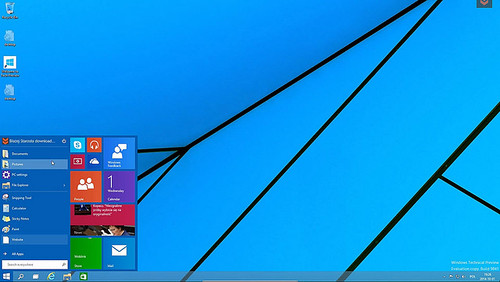
First Impressions of Windows 10

So I've had a laptop running Windows 10 for some time. It's not my work laptop, which is on Windows 7 until our corporate IT group deems otherwise, but one which I sometimes use for ham radio. It has plenty of memory (8GB) and a solid state disk drive (256GB). The only problem I've seen so far is that sometimes the mouse pointer stalls - pretty annoying at times but I can't necessarily blame Windows 10 for it and haven't looked into it because I don't use that computer very much. I was pleased to see that one old device I have for which the latest driver was written for Vista still worked under Windows 10-64.


So I took the plunge and migrated the big desktop as well. This system is a Dell XPS 9100 with two 23" monitors is integrated into the station and a bunch of other technology and so has the greatest chance of having a problem. The key thing, of course, is how well all the devices and applications work. So far it's mostly good. Here's a list I've made up in my first 3 days of operation.

Devices

  1. Rig Control through an inexpensive 4-port PCI Express serial interface - no issues.
  2. KAT500 control through the Elecraft USB to Serial adapter - no issues.
  3. Echo Audiofire 12, a 12 channel 96 KHz audio interface connected to the system's built in Fire-wire port. No issues.
  4. Mouse and Keyboard - no issues
  5. Intel Rapid Storage Technology - This software manages the mirroring of my system drives. It worked as before and reported that the drives were healthy.
  6. A Logitech USB headset which I hadn't used for some time (before I had to rebuild my Windows 7 system due to a head crash, ergo the mirrored drives I run now). The driver installed automatically.

Operating System

  1. I was concerned at first because I saw the task bar icons on the secondary monitor, so at first glance it looked like it was replicated the primary monitor extend of extending the desktop. This turned out to be a feature, so that those icons are available on either monitor. That`s a good idea I think because it makes switching between applications easier.
  2. Windows Edge took over as my default browser from Chrome. I launched Chrome manually and it came right out with a video on how to make Chrome my default browser and pin it to the task bar. Ain't competition great!

Radio Applications

  1. JT-Alert and WSJT-X worked just fine. The first time I tried to transmit the tones came out the wrong sound card, but it was easily set to rights in the WSJT-X options menu and I was back in business on the next go-round.
  2. Elecraft Utilities - work as before (KAT500, KPA500, etc)
  3. DXLab - Launcher worked as did all the applications I tried including DXKeeper, Spot Collector (using Telnet and IRC), ...
  4. FreeDV. The WAE SSB contest was under way so no joy on getting a QSO 20m but the application seems to work just as well as it did on Windows 7. I managed to crash it once but getting ahead of it but I can't blame Windows 10 for that. It's minimal rig control (PTT only) worked fine too.
  5. FLDIGI with the FLDIGI DXLab Gateway also worked perfectly for several PSK31 and PSK63 QSOs.

Other Applications

  1. Courtesy of the my office I have the Adobe Creative Cloud on my home desktop computer and use Adobe Lightroom to edit and catalogue photos for this blog. Under Windows 10, Adobe Lightroom has a problem with the AMD Radeon graphics driver. The consensus is that it is a driver bug and the solution is either to regress to the previous version of the driver or to disable graphics acceleration in the application. I chose the latter and it works fine, although I'll have to remember to change it back if and when the bug is fixed by AMD.
  2. Microsoft Office 365 also worked fine. I'd have been quite surprised if it hadn't.
So far, after 4 days of operating, it's working well. No big problems. Your mileage may vary though.

Tuesday, 5 August 2014

My Field Day 2014 - Digital Station

As band captain of the digital station once again, I had two important goals for 2014. The first was to beat last year's score (and targeted 500 contacts compared to 243 last year). The second and far more important goal was to lose the competition for the coffee pot award, which I won handily last year due to antenna and software problems. Fortunately this year things went better and there was more competition so I lost by a mile.

The antenna setup was much easier using the club's radial-free Cushcraft R8 instead of my 30 year-old Butternut HF6V. By Friday evening we had it up, tested and made a couple of DX contacts on 15 metres. We also strung up a home made 40m dipole which I'd built and tuned as an inverted V during my diving trip to Florida in April. True to theory, in the dipole configuration the antenna tuned a bit higher in the band but with about 2:1 VSWR on the digital subband of 40m and 3:1 on 15m it was well within the capabilities of my tuner. The club tri-bander was also available but we soon decided that it would need some repair work before it could be used again, so we set it aside for the event.

Another advantage over FD 2013 was a year's experience with my transceiver. My first contact on that transceiver was on Field Day 2013 and since that time it has logged another 5000 or so, probably about 1/2 of those in one digital mode or another.

Start-up was not without challenges, though. Digital operation requires an audio interface, rig control, PTT, etc. etc and the software didn't work quite right at the beginning causing a few minutes delay that was quickly resolved. I'd brought my docking station to provide extra USB ports and used every single one of them. The worst of the problems was that input monitor switch on the audio interface became set by accident and caused a sharp feedback sound on transmit that took a few minutes to locate, but we were shortly up and running RTTY on 15 metres.

Unfortunately Brian VE3IBW and I didn't get the QSO rate we were looking for, partly because of band conditions and partly because there was less RTTY activity than expected, so by about 6pm we were well short of the QSO rate we needed to be to hit our target. We had started on 15m but had trouble finding new RTTY stations to work so we went to 20m to work some more. After a while 20m became unproductive so I went over to the 40m CW station and talked to John VA3JI who was the operator at the time to let him know that I was going to try 40m and to let me know if he was getting any QRM. Fortunately there was no QRM even though we were operating at the maximum power for our class and the next 12 hours or so was entirely on 40 and the QSO rate started to pick up.

As night fell the tent filled up with mosquitoes and other annoying insects so Publius VE3XS commandeered the bug zapper from the (now closed) kitchen which made short work of them, and surprisingly didn't cause any QRM. On my list for next year is to bring my own zapper.

By 3AM however, the doldrums set in once again so in desperation I took a break to configure FLDIGI (software for digital modes) with N1MM. Having access to the Internet via my cell phone really helped get it up and running. Once configured, we went to PSK and spent most of the remaining time in that mode. There were many more PSK operators and we really started to make hay, even though the sunshine was still hours away. By the time Brian returned at 6:30 AM I was able to turn the station over to him with just 25 contacts to go to beat the previous years' high water mark.

The other change we made this year was to use a home-made dipole and an additional antenna. On 40m it seemed to work better than the Cushcraft so we turned the R8 over the GOTA station and ran the dipole for most of the remainder of the contest.

I went home to get a few hours of sleep and when I got back to the site at around 1PM I found that Brian had had an outstanding morning on PSK and we were closing in on 300 contacts. By the end we'd reached 309 QSOs using two modes on 3 bands, a new high water mark to beat in Field Day 2015. Next year we are thinking about using a second receiver for spotting unworked stations and maybe setting up for 80 metres as well. The multi-band capability of the digital station really helped rack up the points. In the picture below, you'll see the Coffee Pot Award being presented to someone other than me.


With the great weather, great food (Thanks Peter!), great organization (Thanks Steve!) and great company (Thanks everyone!) it was all in all an excellent weekend.