Showing posts with label Simplex. Show all posts

Tuesday, 18 August 2015

In Search of the Great Channel Debate

YRARC has had a standardized VHF/UHF channel list for about 2 years now. It was mostly driven and developed through the efforts of Don, VE3IXJ and has made public service and EmComm operations simpler by allowing us to select repeater and simplex channels without having to memorize frequencies, CTCSS tones and the like, or figure out how to program someone else's radio when the main task is to actually communicate.

Many of us thought it would be a good idea to have some common frequencies so that clubs could also communicate with each other, especially in an emergency, but it has been difficult for clubs to even begin discussing the issue, much less come up with a plan that everyone is willing to implement.

Why is this so difficult? Let us not underestimate the challenges. I see a number of realities and possibilities.
  1. Clubs in the area don't talk to each other all that much. Maybe that's because we don't have a common channel list! Seriously though, while clubs do compete for members and hamfest vendors and attendees to a certain extent, and there is no wider organization other than RAC that represents radio clubs, other than through ARES there are no formal channels for clubs to coordinate activities or share ideas.
  2. ARES/EmComm groups in the region do talk to each other as RAC has district managers and emergency coordinators but reports so far indicate there is little agreement on the topic.
  3. "NIH" (not invented here) is also a possibility. I know we at YRARC like our list (although I wish our D-STAR repeater channels were a little closer to our analogue repeater channels - there's a lot of knob twisting to go from one to the other). It's natural that we all think our own ideas are the best - at least initially. Also our club radios are suited to this list - no cross-band capability but lots of channels available.
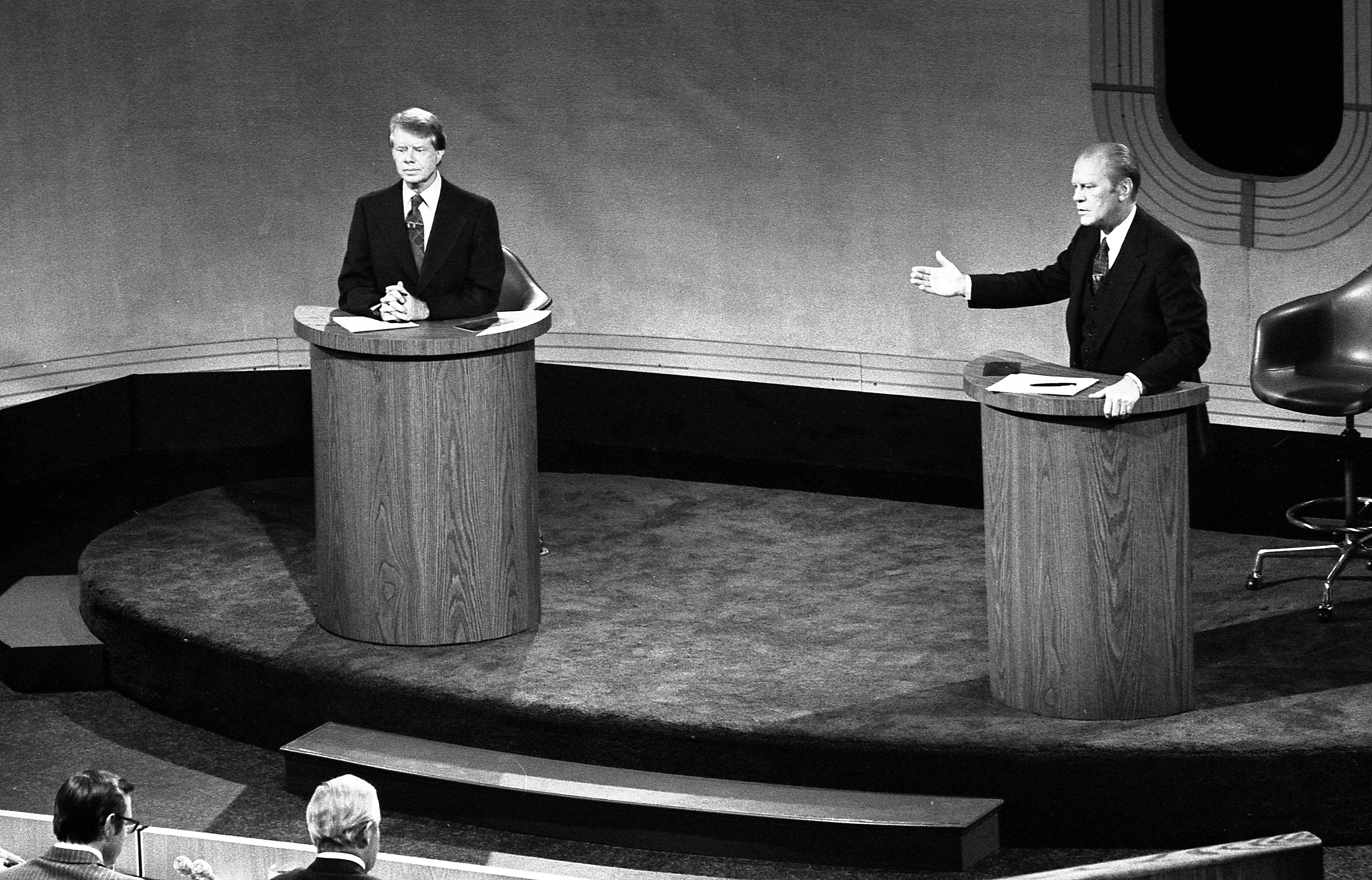

But the questions we should really be asking ourselves are:
  1. Why do we want a common channel list? How do we think that will benefit us?
  2. If we had common channels, how would we coordinate their use? In a major disaster, for instance, how would we organize ourselves with nothing but radio, possibly just simplex radio, to do it with? Once organized, how would participants develop situational awareness and be able to brief each other and potentially other agencies, especially NGOs which don't necessarily have access to the communications facilities that we do.
  3. What are the issues that each club has in developing a channel list, and how do we get this issues on the table for discussion?
  4. What are the compatibility problems we face? Clearly not every region has D-STAR repeaters like YRARC does, but likewise YRARC has no System Fusion or DMR repeaters. Many radios available to EmComm members, like the ones we have in club inventory, lack cross-band capabilities. Other regions may be VHF-only. 
  5. What are the coverage issues? Our EmComm group wants to know the coverage of our repeaters, but coverage means different things to different people. Are we looking for full quieting 100% of the time? Is communication with vehicles sufficient or do we need to understand coverage to hand held radios with a rubber duck? At what power level? Our club handhelds have 4 levels from 100mw to 5 watts, and at the highest power level battery life isn't good and the radio gets hot when you talk.
  6. How do we facilitate the discussion that can fully account for each clubs' needs, understand the issues, and drive toward a solution that everyone can live with?
We might even need to ask ourselves more fundamental questions than these before we can get this resolved, about how we are called out in emergencies and by whom, or whether we need to self organize. Do we see ourselves as a "guard network" for official communications or do we need to assist other agencies like St. John Ambulance, the Canadian Red Cross, the Salvation Army, and others, and when do we show up at their door to help?

As you can see I have lots of questions. I can't wait for the debate! I'm hopeful that the August 23rd GTA ARES/EmComm meeting will move the ball forward in a meaningful way.

Wednesday, 7 January 2015

6 metre net on 30m this week

For the next several months the 6 metre net will frequency and mode hop. Once the Sporadic E season is closing in, we'll revert to to 6m operation. Meanwhile, each week we will choose a new frequency and mode to meet up on.

On Monday, January 12, 2015, 0100Z (8pm Eastern Standard Time) we will convene on 10.141 MHz or the nearest unoccupied frequency. With PSK31 being very narrow band, we will not stray far. The suggested frequencies for PSK31 on the 30m band are 10.138 to 10.142.

I will start calling at exactly 8pm. Anyone is welcome to check in. If you're unfamiliar with PSK31 operation now's your chance to try it out in a forgiving environment.

Suggestions of new frequencies and modes to try are encouraged. I only ask that it be in a band from 6m to 80m, be simplex, and of course legal in Canada.

73,
Chris

P.S. If having a 6m net on 30m doesn't make sense to you, we can call it the "YRARC Experimental Net" instead.

Wednesday, 5 March 2014

Notes from the Shack - March 2014

Contesting isn't for everyone, but when we talk about ARRL Field Day as an emergency preparedness exercise it isn't just about establishing long distance communications in the face of widespread disaster, but operational readiness and reliability. As the recipient of the Coffee Pot Award for my first shot at being a band captain, I've seen how important it is to have a solidly reliable setup.

Mazes of Software

Over the holidays I used Ham Radio Deluxe to participate in a few phone and RTTY contests. The last of these was the RTTY Roundup, and 30 minutes into the contest I was so frustrated with HRD I quickly installed the N1MM logger, MMTTY and 2Tone. Setup took less than an hour and the result was a much better QSO rate, easy identification of dupes (for non-contesters, this is slang for duplicate contacts, not for operators who are easily hoodwinked), and flagging of multipliers. The sudden increase in efficiency let me log more contacts in the dozen or so hours operating the contest than in 24 hours of Field Day - not necessarily an apples to apples comparison but still encouraging.

In conjunction with N1MM I used HDSDR to find signals using a Softrock Lite II connected to the IF of my K3. HDSDR can't control N1MM directly and rather than try to hack a solution while the contest was running I didn't use it for rig control. This resulted in a fair amount of knob spinning to tune in signals but as they were so close together it wasn't a big deal even at the dial's most precise (i.e. slowest) setting of 200Hz per turn. The IF output is picked off prior to the radio's crystal filtering stage, so the narrowest filter (250 Hz) can be used to feed the RTTY decoders while still being able to see a 100 KHz wide swath of the radio spectrum.

The default display in the MMTTY and 2Tone RTTY programs is amplitude over frequency rather than a waterfall. In general I keep the filter narrow (250Hz) and it's more like regular tuning than just clicking the mouse on the signal you want. What the programs lacked in point-and-click was made up by the better decoding accuracy, integration with the logger (worked call signs display in grey, new ones in blue, and multipliers in red, based on the rules of the contest), and fine tuning ability. Using two different decoders at once also helps to figure out the message when there is noise, interference and fading as they use different decoding algorithms. N1MM supports up to 4 decoders at a time which can be used to "vote" for the right interpretation.

I'm still working on finding the best way to integrate all the software without having them fight over the control ports and audio interface. LP-Bridge is a way to have two programs share the same serial port but it's a hassle managing all the layers of software, and is reputed to have performance problems as well as some restrictive licencing.

For non-contest operation, N1MM is usable but not ideal. It doesn't like to flip modes nor can it log modes that aren't supported in the Cabrillo format (JT65 and JT9 for instance, which I frequently use). So I set out in search of a better way, which will be the subject of a future post.

The Bottom Line

I'm not a competitive contester (yet), but using N1MM has transformed the contest experience. By using a footswitch and mounting the microphone on a boom for the January 18th North American QSO Party, it left my hands free to work the radio and the keyboard.

With that in place, the logging process didn't slow down the QSO rate and the number of contacts per hour has gone up substantially. With ARRL Field Day only 5 months away, the job now is to perfect the digital operation and reach the goal of doubling last year's score.

Postscript

I should hope that every club member who uses simplex communications, whether on HF or VHF, has signed up for Logbook of the World. While signing up isn't the simplest of tasks, setup is getting easier and uploading logs is simplicity itself, especially with a good logging program LoTW accepts both ADIF and Cabrillo files, typically used for general and contest logging respectively. I have noticed that contesters are much more likely to load their QSOs into LoTW, as are digital operators. The confirmation rates have been pretty good. Excluding the contacts from the 80's that I transcribed from my paper logbook and uploaded, the percentage confirmation is 59%.

Sunday, 23 February 2014

6m Net - February 17, 2014

Just 5 of us this time, with Mike VE3FGU in the North and Chris VE3NRT at the South end for a longest path of 27km. Rob VE3RQB joined us for the first time having cobbled together a Bazooka running from inside his shack, and was copied at 5x1 by Chris VE3NRT but well over S9 by Mike. John VA3JI and Brian VE3IBW were all clearly audible which allowed for some casual conversation before signing off at 8:25.


After the net Chris and Brian had their first successful QSO with digital voice using FreeDV.

Chris, VE3NRT

Thursday, 20 February 2014

D-STAR / D-RATS Net

A short note to update you on the D-STAR / D-RATS tests conducted last night by Brad VE3HII and me. We chatted for approximately an hour using a combination of Simplex on 145.670 and the DStar repeater VE3YRK @ 147.180.

Brad and I were easily able to connect on simplex from his location in Richmond Hill to mine in Uxbridge and spent most of the time on that frequency.

We conducted several tests including chat - file transfers and broadcast messages and had great results.

Specifically, the broadcast message feature where we demonstrated the ability to transmit a message – that would be received by all on frequency – that was several paragraphs in length and contained a great deal of text and information. A larger three paragraph message was sent in 12 seconds.

Not only that BUT we did this on simplex AND on the repeater AND while transmitting voice at the same time. The D-STAR radios that the club have are of course easily and seamlessly able to toggle back and forth between voice and data with ease.

This broadcast feature in combination with voice is of course a great tool and easily established ad hoc network in the event of an EmComm – EMO situation…. When all the smartphones are dead…

In order to “exercise the muscle” as they say and have more folks try and get comfortable with this – Brad and I are going to meet on 145.670 and/or 147.180 each Monday night @ 8:30 pm – Following the 6M net for those that do both. Perhaps using the D-STAR broadcast to post the 6M results.

If you are interested in joining in – I would highly recommend this for EmComm members – Brad and I will meet you there. We have lots of other things that we would like to test try and get comfortable with such as linking through other repeaters like LSR.

BR and 73

Steve – Ve3eZ

Monday, 17 February 2014

6m Net - February 10, 2014

We had good participation in the net this week with Mike VE3FGU, Brian VE3IBW, Brad VE3HII, John VA3JI, Chris VE3NRT, and Bob VE3WY. Signal strengths were good except that Bob seemed weaker than usual with 5x3 and 5x5 signal reports. Chris at net control had his amplifier working well again up to about 250W output.

The longest two-way path of the day was Bob to Brad at about 50km, and everyone could hear everyone.


The most encouraging report was from John VA3WPN, between Bradford and Woodstock, who reported signals loud and clear at his location. Unfortunately they had faded by the time he was in a position to transmit but at 150km this path is 3 times our previous record.

Hopefully we'll be hearing from John in a future net and seeing some more surprises before too long.


After the net, VE3IBW and VE3NRT did some further experiments with FreeDV and managed to get two way transmission but only one-way audio, but at least there was progress.

Next net is on Monday, February 17th at 8:00pm local on 50.175 USB (Feb 18, 0100Z). All are welcome.

73,
Chris VE3NRT

Sunday, 2 February 2014

6 Metre Net - January 27th, 2014

Last Monday's net had record participation, with Brad VE3HII, Brian VE3IBW, Bruce VE3BV, Bob VE3WY, Charlie VE3SYK, Matt VA3MGN, Mike VE3FGU, and Chris VE3NRT. Once again it was clear than antenna height and directivity are a distinct advantage. Net control VE3NRT was able to easily copy all participants except VA3MGN, who was about 3x3 at both ends. Distance, cross-polarization and obstructions were factors working against solid copy. VE3NRT also had amplifier trouble so ran barefoot but is happy to report that the amplifier has spontaneously started working again and so should be operational for the net on February 3rd.

The net closed at 8:25 after all signal reports and check-ins were complete, but VE3WY and VE3BV continued on at 50.130 MHz to do further checking on Bruce's antenna, which was showing high SWR perhaps due to the effects of weather on the coax.

The longest path was 52km between Matt and Bob although Matt reported Bob's signal was audible but not readable. A slightly shorter path between Bob and Brad was 100% copy. Steve VE3SHA reported hearing Brad and few others but not well enough for a QSO, while Steve VA3SRV reported hearing Mike, Chris and somewhat curiously briefly copied Matt.


On Monday (February 3rd) night at 8pm we'll try once again on 50.175 USB, with VE3NRT and VE3IBW (and anyone else who wants to try) making a FreeDV contact immediately afterward.

Any suggestions for trying other modes are welcome. The purpose of the net is experimental so let's experiment!

73,
Chris VE3NRT

Saturday, 18 January 2014

6 Metre Net Update

Our 6 metre net almost doubled in size this week with 5 stations worked, plus 2 listener reports. As scheduled, we met on 50.175 upper sideband last Monday evening at 8pm. The participants were:

Brian, VE3IBW, with 10 watts horizontally polarized
Brad, VE3HII, with 12 watts into a rotatable dipole
Steve, VE3UT, probably 100 watts into a beam pointed at Aurora/Newmarket
Charlie, VE3SYK, 90 watts into a beam
Chris, VE3NRT, 250 watts to a Butternut vertical at 22'

Charlie was the winner as he could hear all other stations. Chris could hear everyone except Steve, while Brad and Brian could only hear Charlie and Chris. Steve VA3SRV down in Bradford could only hear Charlie on his RTL2832 dongle, while Bob VA3IL could hear Chris and Charlie using an 80M horizontal loop as a receiving antenna from about 20km away.

The longest path was from Charlie to Steve at about 50km. Charlie described the signal as S1. Noise on VE3NRT's vertical was a healthy S5 so while Steve's transmissions were heard, they weren't readable.

At 8:30 VE3IBW and VE3NRT switched over to FM on 52.525MHz to try and raise Don VE3IXJ. Brian thought he heard him but no further contact was made. VE3NRT reported Brian's signal at almost full quieting.

I hope we can get some new participants for this Monday's net. VE3NRT will upload all contacts to LoTW.

Lastly, the January VHF Contest starts today at 2pm. Some local amateurs will be participating in the contest and if you get the chance fire up rig on 6m and give them some contacts.

Wednesday, 8 January 2014

Informal 6-Metre Net

Bob VE3WY, Steve VE3UT and I got together on 6 metres on Monday night to test the feasibility of having a an informal experimental weekly simplex net on 6 metre upper sideband. Unfortunately for Steve, there was a strong noise source on the frequency we chose - 50.160. Bob and I had a nice long conversation despite some extra noise at my end which was probably the result of my antenna not liking the extreme cold - and I logged my first ever 6 metre QSO which was confirmed with a hand-delivered VE3WY QSL card. Bob and I were also running different antenna polarisations as he was using a Yagi and me my old Butternut HF6V vertical, which theoretically costs about 20db. We are about 30km apart although there are few obstructions.

At last night's club meeting there seemed to be several members interested in participating. Most modern HF rigs have 6 metres, as do many multiband antennas (especially verticals). If you don't have a suitable antenna you still might be able to get some RF out using a tuner, or as 6 metre antennas are relatively small, try putting something together yourself. You will get lots of advice from club members on how to do that.

So for the foreseeable future we will meet on Mondays, at let's say 50.175 MHz USB for now, at 8pm Eastern Time. This is not an EmComm exercise and I expect it will mostly be an exchange of signal reports by and for each station, followed by a discussion about whatever we'd like to talk about. The experience we get with 6 metre simplex may help EmComm down the road, of course. With respect to the possibility of interference with DX'ers, should the band actually be open I expect we'd have a quick exchange and all go DX hunting ourselves. One desirable outcome of the net would be to get some enhanced propagation which is the exciting aspect of this band. The net is a great opportunity to shake down your 6 metre setup with on-air testing, and as Bob pointed out at last night's meeting, any level of amateur radio operator's certificate is allowed to use the band.

All contacts with VE3NRT will be uploaded to LoTW on my regular Sunday pm upload. I've published this on the blog first to encourage comments and to give blog readers a bit of an edge. If you're not a member of the club we'd still be happy to hear from you.

73,
Chris