- Welcome & Introductions – Chris VE3NRT
- Adoption of Minutes from the 2015 November general meeting postponed until January.
- Treasurer’s Report – John VA3JI. The next report will be at the January meeting.
- Membership Report – Alf VA3BLE. To date 67 members have paid.
- EmComm Report – Don VE3IXJ. The SET exercise was held on November 7 at two locations, the Regional Headquarters and the trailer in Schomberg. VE3TWR was the control channel. The cross band radio at the Regional Headquarters worked well to communicate from within the EOC to the trailer in Schomberg.
- Using simplex frequencies to communicate with adjacent ARES groups did not work.
- Other groups do not use the same pre-programmed memory channels as YRARC.
- Using simplex frequencies to communicate with adjacent ARES groups did not work.
- Repeater Committee Report – Steve VE3UT and Chris VE3NRT
- The current repeaters are working well.
- We have been approached by an existing repeater operator who would be receptive to us using the site and repeater pair for a Yaesu System Fusion 2m repeater. The site is located in Uxbridge on a police tower. Yaesu is currently offering a repeater at $500US until the end of the year. There are drawbacks to the proposal since there is a co-channel US repeater with coverage reaching the GTA. The repeater is built with 2 mobiles back to back, and reportedly not robust and may need to be run a half power. It was decided not to proceed with the proposal.
- The IRLP/Echolink will be working soon.
- The current repeaters are working well.
Showing posts with label System Fusion. Show all posts
Showing posts with label System Fusion. Show all posts
Wednesday, 30 December 2015
YRARC General Meeting Minutes - 2015-12-01
Meeting held in the Sharon Temperance Hall. Called to Order at 19:30 by Chris VE3NRT. Total members and guests attending: 36

Tuesday, 18 August 2015
In Search of the Great Channel Debate
YRARC has had a standardized VHF/UHF channel list for about 2 years now. It was mostly driven and developed through the efforts of Don, VE3IXJ and has made public service and EmComm operations simpler by allowing us to select repeater and simplex channels without having to memorize frequencies, CTCSS tones and the like, or figure out how to program someone else's radio when the main task is to actually communicate.
Many of us thought it would be a good idea to have some common frequencies so that clubs could also communicate with each other, especially in an emergency, but it has been difficult for clubs to even begin discussing the issue, much less come up with a plan that everyone is willing to implement.
Why is this so difficult? Let us not underestimate the challenges. I see a number of realities and possibilities.
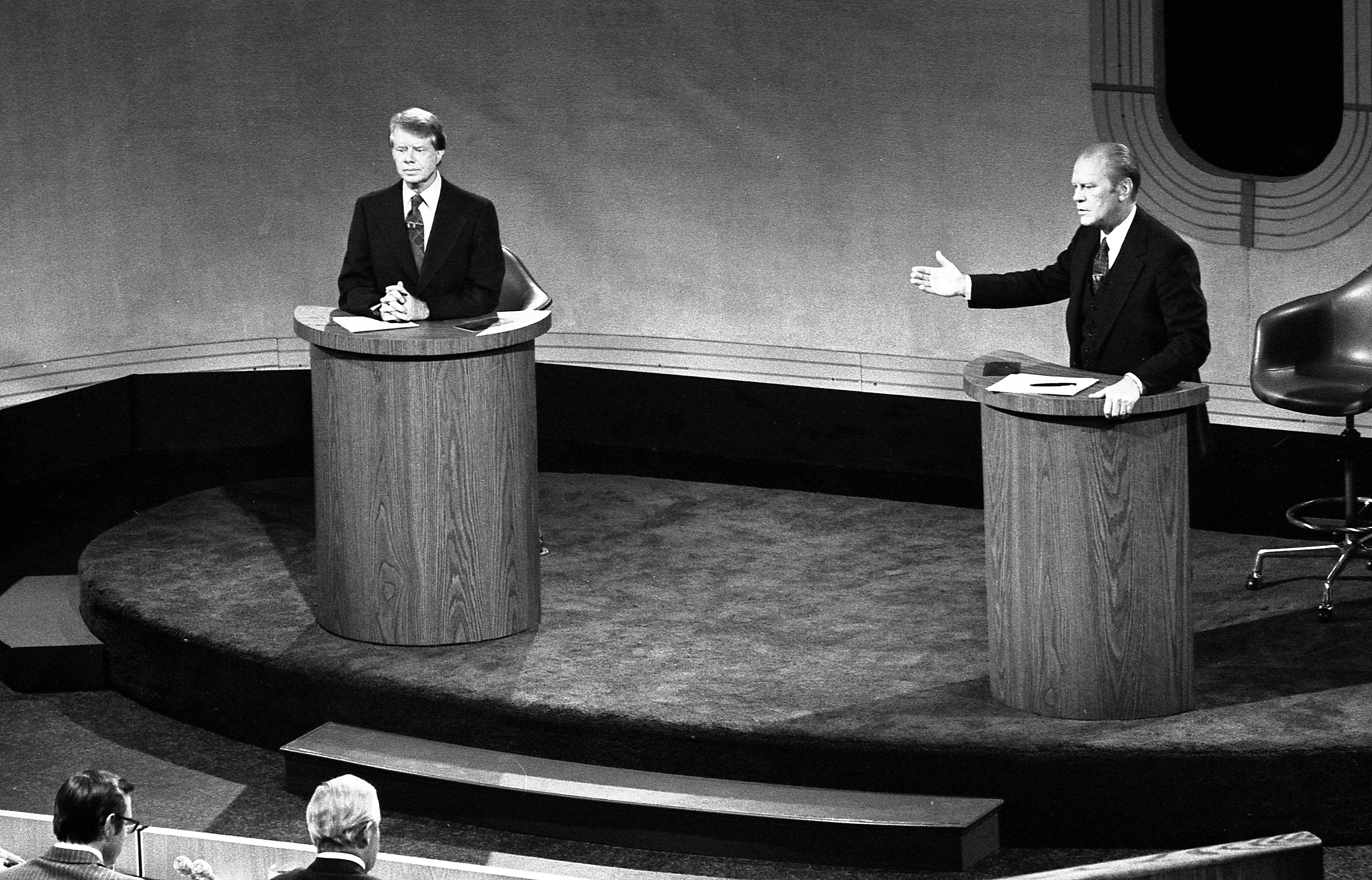
Many of us thought it would be a good idea to have some common frequencies so that clubs could also communicate with each other, especially in an emergency, but it has been difficult for clubs to even begin discussing the issue, much less come up with a plan that everyone is willing to implement.
Why is this so difficult? Let us not underestimate the challenges. I see a number of realities and possibilities.
- Clubs in the area don't talk to each other all that much. Maybe that's because we don't have a common channel list! Seriously though, while clubs do compete for members and hamfest vendors and attendees to a certain extent, and there is no wider organization other than RAC that represents radio clubs, other than through ARES there are no formal channels for clubs to coordinate activities or share ideas.
- ARES/EmComm groups in the region do talk to each other as RAC has district managers and emergency coordinators but reports so far indicate there is little agreement on the topic.
- "NIH" (not invented here) is also a possibility. I know we at YRARC like our list (although I wish our D-STAR repeater channels were a little closer to our analogue repeater channels - there's a lot of knob twisting to go from one to the other). It's natural that we all think our own ideas are the best - at least initially. Also our club radios are suited to this list - no cross-band capability but lots of channels available.
But the questions we should really be asking ourselves are:
- Why do we want a common channel list? How do we think that will benefit us?
- If we had common channels, how would we coordinate their use? In a major disaster, for instance, how would we organize ourselves with nothing but radio, possibly just simplex radio, to do it with? Once organized, how would participants develop situational awareness and be able to brief each other and potentially other agencies, especially NGOs which don't necessarily have access to the communications facilities that we do.
- What are the issues that each club has in developing a channel list, and how do we get this issues on the table for discussion?
- What are the compatibility problems we face? Clearly not every region has D-STAR repeaters like YRARC does, but likewise YRARC has no System Fusion or DMR repeaters. Many radios available to EmComm members, like the ones we have in club inventory, lack cross-band capabilities. Other regions may be VHF-only.
- What are the coverage issues? Our EmComm group wants to know the coverage of our repeaters, but coverage means different things to different people. Are we looking for full quieting 100% of the time? Is communication with vehicles sufficient or do we need to understand coverage to hand held radios with a rubber duck? At what power level? Our club handhelds have 4 levels from 100mw to 5 watts, and at the highest power level battery life isn't good and the radio gets hot when you talk.
- How do we facilitate the discussion that can fully account for each clubs' needs, understand the issues, and drive toward a solution that everyone can live with?
We might even need to ask ourselves more fundamental questions than these before we can get this resolved, about how we are called out in emergencies and by whom, or whether we need to self organize. Do we see ourselves as a "guard network" for official communications or do we need to assist other agencies like St. John Ambulance, the Canadian Red Cross, the Salvation Army, and others, and when do we show up at their door to help?
As you can see I have lots of questions. I can't wait for the debate! I'm hopeful that the August 23rd GTA ARES/EmComm meeting will move the ball forward in a meaningful way.
Subscribe to:
Posts (Atom)