- Welcome & Introductions: Chris VE3NRT
- Adoption of minutes from 2018/02/06. Moved Brian VE3IBW, seconded Rick VA3VO. Carried.
- Treasurer's Report; Charles VA3TTB. Members may obtain the opening and closing balances from the club secretary. Receipts: Excess money from Winter Field Day $105.00; Expenditures: Serial port adapter $28.24, Scout Winter Camp Gas: $23.39.
- Insurance: Charles VA3TTB. Our membership at RAC has expired, and membership in RAC could have benefits with the future purchase of insurance. MOTION: That YRARC join Radio Amateurs of Canada as an affiliate club for an annual cost of $27.95 plus GST. Moved Rick VA3VO, seconded John VA3JI. Carried.
- Repeaters: Steve VE3UT: VE3YRA will be off the air on Wednesday March 7, at 09:00 for approximately one hour, to replace the power supply that had recently failed. The repeater has been on air using a temporary supply. Doug VE3ATP is waiting for better weather to replace the VE3YRK antenna. Don VE3IXJ mentioned there is a new DMR repeater north of Bradford.
Showing posts with label DMR. Show all posts
Showing posts with label DMR. Show all posts
Monday, 2 April 2018
Minutes - YRARC General Meeting - March 6, 2018
Meeting held in the Sharon Temperance Hall. Called to Order at 19:35 by Chris VE3NRT. Total members and guests attending: 28.

Sunday, 26 February 2017
Minutes - YRARC Board of Directors Meeting 2017-01-17
Meeting held in the Magna Centre, Multi Purpose Room 1. Called to Order at 19:05 by Chris VE3NRT. Board members attending: Chris VE3NRT Pres, Geoff VA3GS, Eric VE3EB, Steve VE3UT, Doug VE3ATP, Rick VA3VO, David VA3DCY Secty. Absent: Barry VA3LLT, John VE3IPS V. Pres. John VA3JI Treasurer. Others attending: None
- Approval of agenda and declaration of conflict of interest: Chris VE3NRT. Additions: None. Motion to adopt the agenda, moved Eric VE3EB, seconded Geoff VA3GS. Carried.
- Minutes: David VA3DCY. Minutes of the 2016/12/20 meeting to be adopted at the February meeting.
- Treasurer's Report: Geoff VA3GS for John VA3JI.
- Opening Balance 2016/01/01 [Available to members on request to Secretary]
- Income: Dues $80.00
- Refund from Markham Fair $1,856.00
- Total income $1,936.00
- Expenditures: None $0.00
- Closing Balance 2017/01/17 [Available to members on request to Secretary]
- Note: The December statement received and balanced. JI
- Moved by Geoff VA3GS, seconded by Steve VE3UT to adopt the treasurer's report. Carried.
- Opening Balance 2016/01/01 [Available to members on request to Secretary]
- Meetings: Geoff VA3GS. The speakers planned for the upcoming general meetings are: February - Steve VE3EZ, March - Mike VE3MKX, April - Bob VE3WY and May John VA3KOT.
- Winter Field Day: Steve VE3UT. WFD will have 6 people attending. The proposed budget is $140 for food and $100 for gas. Rick VA3VO's trailer will be used for cooking and there will be 2 trailers for radios. Norma, the owner of Al's Tack Shop, enquired about the club's insurance, since the site may be icy. David VA3DCY will contact the insurance company to provide Norma with proof of our insurance.
- Repeaters: Steve VE3UT
- There have been some recent D-STAR outages, likely caused by a malfunctioning firewall.
- The UPS at the site is being upgraded.
- There have been some recent D-STAR outages, likely caused by a malfunctioning firewall.
- Trillium Grant Proposal
- Eric VE3EB. Eric is waiting for proposals from EmComm. Steve VE3UT: There are no available pairs available in the GTA for a DMR repeater. We could use the UHF pair from the D-Star repeater. Chris VE3NRT asked is there DMR coverage or adequate coverage in the GTA? It was noted that a used Motorola DMR repeater costs approximately $850 US on E-Bay.
- Should replacement of one or more existing analogue repeaters be included in the Trillium Grant proposal? The existing repeaters are older than 30 years and it is difficult to replace parts. Replacements could include: 2 VHF repeaters, 1 UHF repeater, 3 controllers and switching power supplies. The radios should be commercial frequency agile radios. The priority for replacement is the VE3YRC VHF repeater.
- Chris VE3NRT proposed including a HamWan 'back-bone' data network.
- Eric VE3EB suggested upgrading the club web site.
- Eric VE3EB. Eric is waiting for proposals from EmComm. Steve VE3UT: There are no available pairs available in the GTA for a DMR repeater. We could use the UHF pair from the D-Star repeater. Chris VE3NRT asked is there DMR coverage or adequate coverage in the GTA? It was noted that a used Motorola DMR repeater costs approximately $850 US on E-Bay.
- D-Rats: Although D-Rats works on D-Star, it can only send files 'point-to-point', ie from one radio to another. Files can not be sent through an intermediate station, ie from radio 1, via 2 to 3.
Tuesday, 18 August 2015
In Search of the Great Channel Debate
YRARC has had a standardized VHF/UHF channel list for about 2 years now. It was mostly driven and developed through the efforts of Don, VE3IXJ and has made public service and EmComm operations simpler by allowing us to select repeater and simplex channels without having to memorize frequencies, CTCSS tones and the like, or figure out how to program someone else's radio when the main task is to actually communicate.
Many of us thought it would be a good idea to have some common frequencies so that clubs could also communicate with each other, especially in an emergency, but it has been difficult for clubs to even begin discussing the issue, much less come up with a plan that everyone is willing to implement.
Why is this so difficult? Let us not underestimate the challenges. I see a number of realities and possibilities.
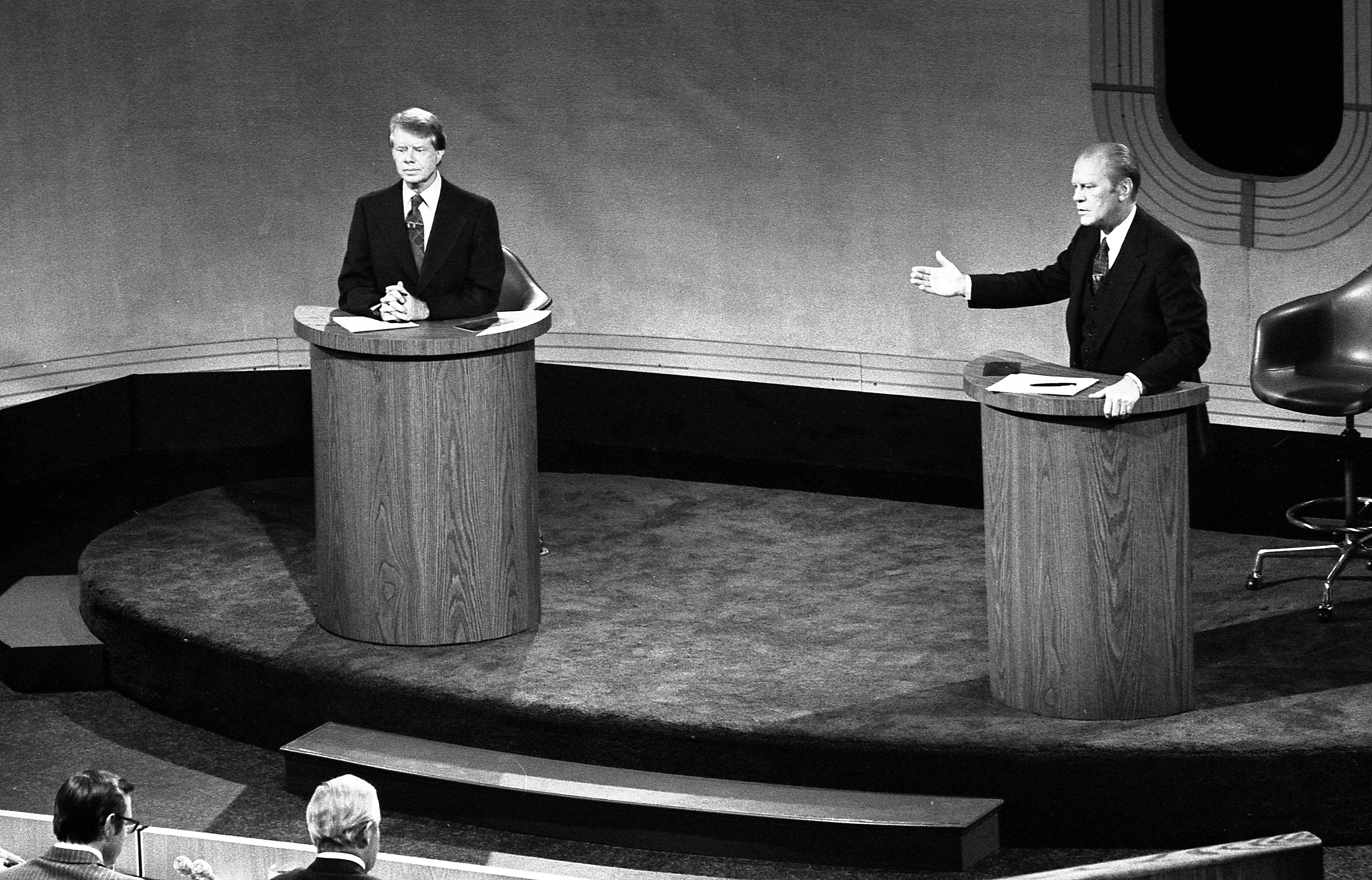
Many of us thought it would be a good idea to have some common frequencies so that clubs could also communicate with each other, especially in an emergency, but it has been difficult for clubs to even begin discussing the issue, much less come up with a plan that everyone is willing to implement.
Why is this so difficult? Let us not underestimate the challenges. I see a number of realities and possibilities.
- Clubs in the area don't talk to each other all that much. Maybe that's because we don't have a common channel list! Seriously though, while clubs do compete for members and hamfest vendors and attendees to a certain extent, and there is no wider organization other than RAC that represents radio clubs, other than through ARES there are no formal channels for clubs to coordinate activities or share ideas.
- ARES/EmComm groups in the region do talk to each other as RAC has district managers and emergency coordinators but reports so far indicate there is little agreement on the topic.
- "NIH" (not invented here) is also a possibility. I know we at YRARC like our list (although I wish our D-STAR repeater channels were a little closer to our analogue repeater channels - there's a lot of knob twisting to go from one to the other). It's natural that we all think our own ideas are the best - at least initially. Also our club radios are suited to this list - no cross-band capability but lots of channels available.
But the questions we should really be asking ourselves are:
- Why do we want a common channel list? How do we think that will benefit us?
- If we had common channels, how would we coordinate their use? In a major disaster, for instance, how would we organize ourselves with nothing but radio, possibly just simplex radio, to do it with? Once organized, how would participants develop situational awareness and be able to brief each other and potentially other agencies, especially NGOs which don't necessarily have access to the communications facilities that we do.
- What are the issues that each club has in developing a channel list, and how do we get this issues on the table for discussion?
- What are the compatibility problems we face? Clearly not every region has D-STAR repeaters like YRARC does, but likewise YRARC has no System Fusion or DMR repeaters. Many radios available to EmComm members, like the ones we have in club inventory, lack cross-band capabilities. Other regions may be VHF-only.
- What are the coverage issues? Our EmComm group wants to know the coverage of our repeaters, but coverage means different things to different people. Are we looking for full quieting 100% of the time? Is communication with vehicles sufficient or do we need to understand coverage to hand held radios with a rubber duck? At what power level? Our club handhelds have 4 levels from 100mw to 5 watts, and at the highest power level battery life isn't good and the radio gets hot when you talk.
- How do we facilitate the discussion that can fully account for each clubs' needs, understand the issues, and drive toward a solution that everyone can live with?
We might even need to ask ourselves more fundamental questions than these before we can get this resolved, about how we are called out in emergencies and by whom, or whether we need to self organize. Do we see ourselves as a "guard network" for official communications or do we need to assist other agencies like St. John Ambulance, the Canadian Red Cross, the Salvation Army, and others, and when do we show up at their door to help?
As you can see I have lots of questions. I can't wait for the debate! I'm hopeful that the August 23rd GTA ARES/EmComm meeting will move the ball forward in a meaningful way.
Subscribe to:
Posts (Atom)