Showing posts with label ARISS. Show all posts

Monday, 3 January 2022

SSTV from the International Space Station

Receiving SSTV is one of the easier things to do when it comes to space communications. Two or three times are year the ISS broadcasts SSTV images on the 2 metre band. The most recent one finished a few days ago and was themed on Lunar Exploration. The signals are strong, and cycle constantly (2 minutes on, 2 minutes off) so there's a good chance of copying lots of them.

Sending SSTV could be done with a old school tape player, as it is just audio. The images are likely not encoded into audio right there on the ISS, but only exist in audio form. Still, for many who never done it, it's quite fun. The majority of passes in my area were during the night, so I left the radio and computer running and just looked at what I'd received in the morning, as did other members of the club. John VE3IPS went minimalist and copied an image by holding a smartphone microphone up to the speaker of a handheld.

I used my home VHF station, MMSSTV software, with an ICOM-7100 (removed from the car shortly after the pandemic shutdowns) and a Diamond X300-NA antenna at 25'. Verticals aren't idea for satellite communications but they do work. I heard the first ham transmission from the space shuttle by Owen Garriott W5LFL (SK) in 1983 using my mobile radio and a mag-mount antenna on the roof of my Volvo.

I tracked the ISS using gpredict, a multi-platform free open source software package. Through the (also free open source) programs rigctld and rotorctl it can compensate for Doppler shift and point your antennas at the spacecraft. With less than 3kHz shift it is hardly necessary to do Doppler compensation but I did anyway because I could, and with a vertical I certainly didn't need the rotor control capability. 

One small complaint about the organization of the event was that the 12 images were almost perfectly timed with the orbital period, so I received many copies of some, few of others and none of #5. On each pass I'd received 2 to 3 images and while most of them time there was some noise, when I received 3 images one of them was usually only partially copied.

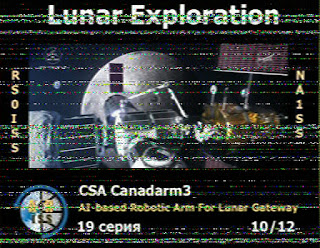
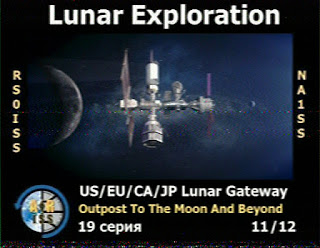
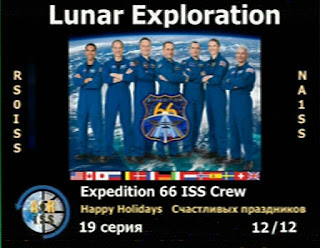
Here's the best of each. These are unedited files. If I combined several into a single image, it could be cleaned up considerably.

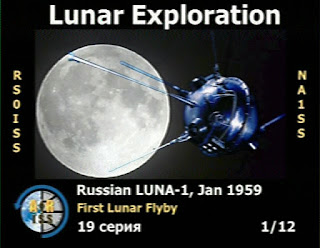
1/12
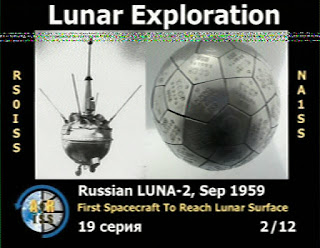
2/12
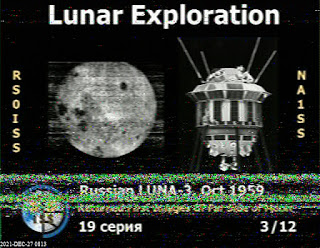
3/12
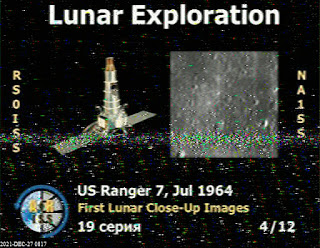
4/12

5/12 - I missed this one, but Mike VE3EYS copied it and sent it to me. 

I did not copy image #5

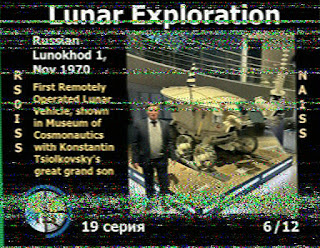
6/12
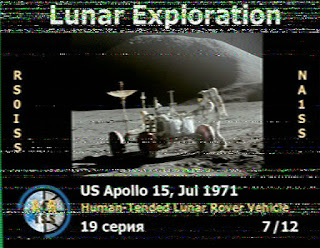
7/12
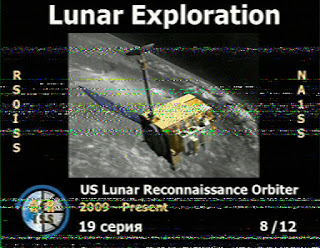
8/12
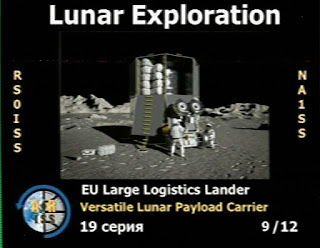
9/12
10/12
11/12
12/12

Friday, 18 June 2021

Field Day is Coming

The York Region Amateur Radio Club board has decided to cancel our Field Day operations again this year out of caution with the pandemic and compliance with Ontario guidelines. We are optimistic that we will be able to hold the event in 2022. 

 Meanwhile, club members are encouraged to operate a Field Day station either from home or an outdoor location, either on AC power, battery or generator, on HF or VHF, on CW, Phone or Digital, and to submit their score to the ARRL, specifying "York Region Amateur Radio Club" as their home club. As well as recognizing the individual scores, the ARRL will also recognize the overall club score when they publish the results in QST magazine. RAC will also publish the results for the Canadian stations in TCA ("The Canadian Amateur") magazine. I'd love to see a good turnout of members. 

The ISS will be operating a repeater on Field Day which you can use to make 1 (and only 1) contact for credit for the event. The limit of 1 contact is because the ISS is overwhelmed by Field Day activity so the limit will give more stations a chance at making a successful contact. The repeater, part of the ARISS project, operates on FM and contact can be made with a dual-band mobile radio and vertical antenna. A fairly clear view of the horizon is advisable as a vertical antenna does not radiate much straight up so contact is most likely when the ISS is at lower elevation angles. 

Here's the announcement from the ARRL 

International Space Station to be in Cross-Band Repeater Mode for Field Day


The Amateur Radio on the International Space Station (ARISS) cross-band repeater will be available for ARRL Field Day, June 26 - 27. 

Contacts will count toward Field Day bonus points as satellite contacts and Field Day contacts. Field Day rules limit stations to one contact on any single-channel FM satellite. Note that contacts made during Field Day by ISS crew would only count for contact credit, but not for satellite bonus points. 

ISS cross-band repeater contacts are also valid AMSAT Field Day satellite contacts. The ARISS cross-band repeater uplink is 145.990 MHz (67 Hz tone), with a downlink of 437.800 MHz. ARISS suggests that those unfamiliar with the ISS repeater may want to practice with it prior to Field Day. 

ARISS had planned to switch modes to the Automatic Packet Reporting System (APRS) during the second week of June, but this won't happen until after the first ARISS school contact following ARRL Field Day. The ARISS ham station will be off-air during spacewalks on June 16 and June 20.

Copyright © 2021 American Radio Relay League, Incorporated. Use and distribution of this publication, or any portion thereof, is permitted for non-commercial or educational purposes, with attribution. All other purposes require written permission.